





You’ve probably already seen dramatic headlines, exaggerated claims, vague teasers, and “You won’t believe what happened next” content.
Sure, clickbait works for about five seconds. It gets the click, but then people bounce. And if you’re actually trying to build something real or run a business page that people trust, clickbait is basically duct tape on a leaking roof. It might work for a hot second, but it’s all coming down eventually.
This guide breaks down how to ditch the clickbait playbook, create content that gets actual engagement (not just hate-clicks), and use your social media tools to stick with a strategy that’s honest and actually adds value.
Why Clickbait is Harmful
Clickbait pretty much always follows the same playbook: make a big promise but keep it super vague. “You’ll never guess what happened in this video.” “She tried this one trick; doctors hate her.” “Everyone is talking about this shocking new feature.”
Cool, people click. But then what happens?
You’ve got a bunch of annoyed people who feel duped, a surge of random traffic that leaves in two seconds, and algorithms that start side-eyeing your content. The long-term damage is even worse though: you kill people’s trust in you.
Ethical content is different. It’s just... honest. Clear about what it is, delivers what it promises, and gives people something actually useful. You might get fewer clicks overall, but the people who do click? They actually want to be there.
Before we get into what you should do instead, let’s break down exactly what we’re trying to avoid here and why it matters.
People stop trusting you: When someone clicks your post and realizes you basically lied to them, they don’t just leave, they remember. A 2024 study found that 58% of people have straight-up unfollowed brands that keep using sketchy, misleading headlines.
Everyone bounces immediately: Sure, clickbait gets the click. But then what? People feel tricked, hit the back button in like two seconds, and now the algorithm thinks your content sucks.
Your reputation takes a hit: Look, we’re in an era where being real actually matters. Getting labeled as “that clickbait brand” isn’t the flex you think it is. Yes, your post might blow up, but for all the wrong reasons, and people will roast you for it.
The algorithm starts hating you: Social platforms and search engines aren’t stupid anymore. They can see when people click but don’t stick around, and they’ll punish you for it. So that quick win you got? It will cost you way more down the line.
The Core Principles Behind Ethical Content

Ethical content doesn’t mean boring; it just means real. You’re creating curiosity by being clear, not by confusing people on purpose.
Here’s what this actually looks like in practice:
Your headline should match what’s inside
If your headline says something, your actual content better deliver it. No bait-and-switch BS or hidden agendas.
Set expectations you can actually beat
Better to underpromise and overdeliver. Don’t blow things out of proportion or make claims you can’t back up. Your title shouldn’t promise way more than what’s actually there.
Always lead with value
Every post should answer: “What does my audience actually get from this?” Start with their needs, not yours. The value shouldn’t be hidden; it should smack them in the face right away.
Use emotion the right way
Being inspiring, funny, or intriguing? Great. Trying to scare people or shock them for no reason? That’s already clickbait content.
Examples of Ethical Alternatives to Clickbait
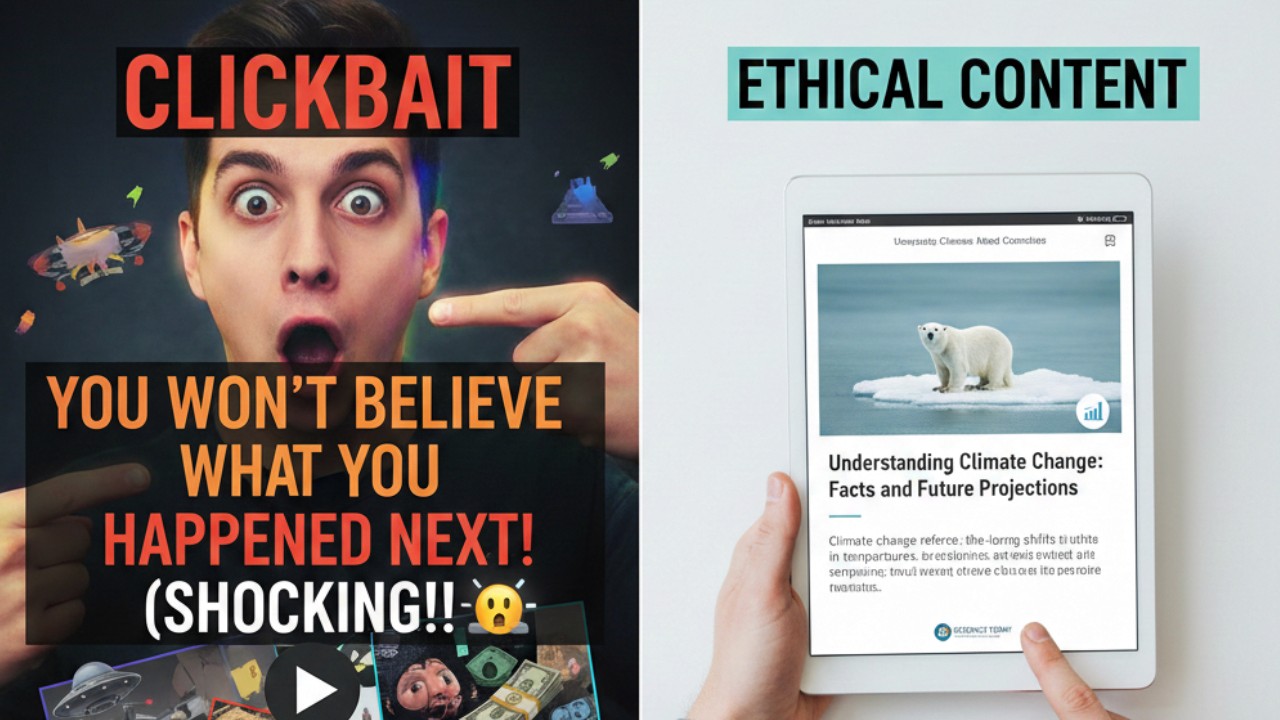
This is the part everyone actually wants: real alternatives to clickbait posts. These are things you can use in regular posts, stories, videos, emails, ads, or whatever without killing your engagement.
Here are seven approaches that drive engagement without manipulation.
1. Make People Curious
Curiosity is huge in content marketing. Clickbait abuses it by hiding all the important details. But you don’t need to do that. All you need to do is make your message interesting enough that people want to click.
Instead of vague nonsense, write headlines that tell people what they’re getting into but still make them curious:
“The small change we made that doubled our content saves. No hacks involved.”
“What happened when we switched our posting strategy for 30 days.”
“Users kept requesting this feature. Here’s the version we finally built.”
See what’s happening here? You’re being upfront about what they’re clicking on. There’s no guessing games, but they still want to know more.
2. Use Real Data Instead of Made-Up Drama
There’s nothing more refreshing than content that’s both interesting AND true. Real numbers grab attention naturally. Aside from that, they make you look credible because people can tell you’re not just making stuff up.
Try angles like:
“82% of our users said this one change made planning faster.”
“We analyzed 300 posts. Here’s what actually increases reach.”
“After launching this feature, response times dropped by 46%.”
Specific data says “we actually know what we’re talking about” without you having to scream it. The data becomes your hook, not some manufactured content. It tells readers you’ve done your homework and have evidence to back up your claims.
3. Focus on Problem-Solution Storytelling
This is honestly one of the easiest and most effective ways to not be clickbait-y. Instead of hyping up something vague, just clearly show:
The problem your audience has
The realistic solution you’re offering
What they get out of it
You don’t have to promise the moon. Just show how you make life easier. This kind of content also gets shared a ton, especially in work contexts.
Here are some examples:
“Struggling to keep your team aligned? Here’s how to fix chaotic content planning.”
“If approvals slow you down, try these workflow tweaks.”
“Creators keep burning out; here’s how to avoid it without posting less.”
4. Tell Stories, Not Shock-Bait
Clickbait loves shock and outrage. But ethical content uses actual storytelling, which is way more powerful and way more human.
You can share:
customer success stories
behind-the-scenes stuff
internal challenges and how your team dealt with them
real transformations (not fake before-and-after BS)
origin stories or turning points
Example formats:
“When we built our scheduling feature, this bug almost destroyed launch week—here’s how the team saved it.”
“One of our users almost quit content creation. Here’s the system that helped her stay consistent.”
“Why our CEO still answers customer emails every Friday.”
Why does this work? Stories stick in people’s heads. When they’re true and told honestly, they create genuine emotional connections.
5. Provide Value-Packed, Educational Content
People love posts they can save, share, screenshot, and come back to. Educational content does this naturally without needing to hype anything up.
Here are some formats you can try:
Tutorials with screenshots or screen recordings
Step-by-step guides with numbered instructions
Infographics that break down complicated stuff
Carousel posts that teach a skill
Video tutorials showing real workflows
Resource roundups with tool recommendations
Why is this engagement gold? Educational content gets saved, shared, and revisited. People bookmark it for later. By creating ethical and evergreen content, you become a trusted expert instead of just another account begging for clicks.
6. Tease Stuff, But Don’t Be Shady About It
You can still build anticipation, just do it in a way that respects people’s time. Tell them what they’re getting, then invite them to learn more.
Check out the difference:
Clickbait style: “You won’t believe what feature we’re launching.”
Ethical but still interesting content: “We’re launching a feature that fixes one of the most common frustrations in social media planning. Here’s a hint: your calendar will thank you.”
This way, you’re building excitement while being totally upfront about what’s inside.
7. Use Emotion Without Being Manipulative About It
Emotion is what makes great content great. The trick is not weaponizing it. Some of the emotions you can use in your content are the following:
Hope and optimism
Feeling seen and validated
Pride in what you’ve accomplished
Connection and belonging
Curiosity and wonder
In contrast, here are the emotions to stop exploiting:
Fear (“If you don’t do this, you’ll fail!”)
Shame (“Everyone else figured this out, why haven’t you?”)
Fake FOMO (“Only 3 spots left!”)
Rage bait that’s just there to piss people off
Final Thoughts
At the end of the day, clickbait is a shortcut, and shortcuts rarely lead to sustainable results. Ethical content takes a little more thought, a little more creativity, and actually respecting that people’s time matters. But it pays off big time in real trust, actual relationships, and engagement that means something.
And when you combine ethical content with social media tools like Sparkum, you’ve got a workflow that works and isn’t based on shady tactics.