




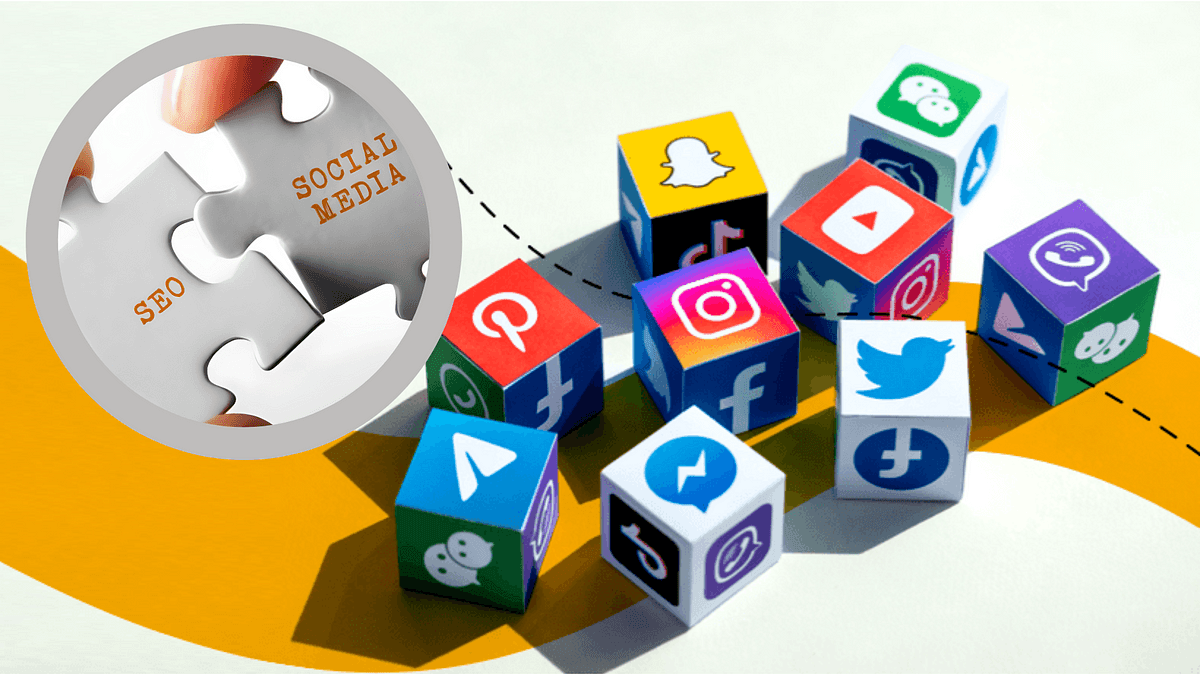
Still thinking of social media as just a place to post updates and chat with followers?
The future of search isn’t just Google. It’s happening inside the apps your audience already uses every single day. A lot of Gen Zs and millennials are going to social media platforms to actively search for brands.
This guide breaks down why social SEO needs to be part of your 2026 strategy, how it plays out on different platforms, and what you can actually do right now to get found in your niche.
What Exactly Is Social SEO?
Simply put, it’s all about optimizing your profiles and your content.
Think of it as the “cool younger sibling” of traditional SEO. While the old-school version is all about fighting for the top spot on Google, Social SEO is about winning the search bar on TikTok, Instagram, and YouTube.
Social SEO is more about the text-based details baked into your content. Your captions, alt-text, closed captions, and hashtags all help algorithms and the audience figure out what your content is actually about.
The Core Differences Between Social SEO and Traditional SEO
Both are about improving visibility, but they have the following differences:
Content Format
Traditional SEO loves a long, detailed blog post. Social SEO is all about whatever the platform does best, which is usually photos or video. So, you can’t just copy-paste your SEO strategy across both. What works on Google doesn’t automatically work on TikTok.
Search Intent

Source: DilokaStudio via Freepik
Google searchers usually want the full answer: thorough, credible, well-sourced. People who search on social media want something faster and more real. They’re looking for creators and regular people they actually trust, not a 2,000-word article.
Ranking Factors
Google weighs things like backlinks and domain authority. On the other hand, social platforms care more about:
How recent is your post
Whether people watched till the end
How relevant your content is to what that specific user already likes
Lifespan
A well-optimized blog post can sit on page one of Google for years. Social content has a shorter window of peak visibility. But here’s the upside: if you optimize it well, it can keep showing up in search results long after the initial buzz dies down.
Why Your Audience Isn’t Googling Anymore
The numbers don’t lie. The way people search for things has genuinely changed, and the data makes it pretty hard to ignore. Here are some reasons why your audience has stopped Googling:
Gen Z Has Officially Left Google Behind
Gen Z is 25% less likely to use Google than Gen X. That’s a whole generation finding information in a completely different way. Around 41% of them go to social media first when they want to look something up, compared to just 32% who still reach for a search engine.
Millennials Are Following Suit
It’s not just a Gen Z thing either. More than a third of millennials are now turning to social platforms instead of Google for their searches. That’s a huge chunk of people actively choosing to discover things through social rather than search.
The TikTok Search Phenomenon
Nothing shows this shift better than TikTok. Gen Z prefers it over Google for things like beauty tutorials and gift ideas, which is at 40%. And 41% of millennials start their product search journey on TikTok specifically.
At that point, it’s not really a social app with a search bar. It’s a search engine that also has video.
Mobile-First Search Behavior
A lot of this makes sense when you realize that a third of people are using their phones as their only way to access the internet. That number jumps to 39% for millennials and 40% for Gen Z. When your phone is your internet, whatever app you already have open is where you start searching.
Why Social SEO Delivers Real Business Results
So, why does social SEO actually move the needle for your brand? It’s not just about keeping up with trends. There are real, measurable reasons to care about this.
You show up exactly when people are ready to buy
The thing that makes SEO so valuable, on any platform, is timing.
When someone searches for “best budget skincare routine” on TikTok, they’re not mindlessly scrolling. They are actively looking for something.
Getting in front of that person at that moment is way more valuable than any passive impression.
You get double the visibility
A lot of people don’t realize that a well-optimized social profile doesn’t just rank inside the app. It shows up on Google, too.
That means one piece of content, done right, can get discovered in two completely different places. That’s a pretty good return on effort.
Your content keeps working after you post it

Social feeds move fast, but search doesn’t. When you actually put some thought into your keywords, your content doesn’t just vanish after 24 hours. It sticks around.
It’s basically the “secret sauce” for social media longevity. Instead of your post being a one-hit wonder that dies by Monday, it keeps popping up in search results for months. It’s the closest you’ll get to evergreen content.
People actually trust social search results
Social searchers want real people, real opinions, and real experiences. 85% of younger audiences discover new products through social media, and 46% use it instead of a search engine altogether. Meeting them there, in a space they already trust, is a completely different ballgame than running an ad at them.
How Social Algorithms Actually Work
If you want to optimize for social search, it helps to understand the mechanics behind it:
The Role of Machine Learning
Platforms like TikTok aren’t just watching your video; they’re reading it, listening to it, and analyzing every piece of information attached to it. This includes:
Picking up on what’s visually in the frame
Transcribing what you’re saying out loud
Reading your captions and hashtags
Tracking exactly who engages with your content and how
User Behavior Signals
A successful social SEO strategy isn’t just about what you post. It’s about how people react.
The biggest signals most platforms look at are watch time, likes, comments, and shares, followed by actual content. It also comes down to factors like the language, location, and device type.
The Recency Factor
Unlike Google, where an old authoritative post can sit at the top for years, social platforms heavily favor recent content.
That’s actually good news. It means there’s always an opportunity to rank for a search term. Even if a massive creator already “owns” a certain topic, you can still swoop in and rank just by posting something fresh and well-optimized.
How To Build Your Social SEO Strategy
Getting social SEO right takes some planning, but it’s totally doable. Here’s what’s worked for people.
Step 1: Figure Out What People Actually Search For
Each platform is different, so you need to do some digging on where your audience hangs out.
For TikTok and Instagram, you can conduct keyword research on the search bar itself. Just type your main topic and see what the auto-fill suggests.
Step 2: Keep Everything Organized
Make a simple spreadsheet to track your keywords across platforms. Include stuff like your main keywords for each platform, longer variations people might search, how popular they are, how hard they’d be to rank for, and what type of content works best.
This way, you’re not starting from scratch every time you post.
Step 3: Update What You’ve Already Got
Don’t forget about your old posts! Go back and sprinkle in some keyword magic, like adding descriptive alt texts or updating old captions with better keywords.
Step 4: Make It a Habit
Create a quick checklist for each platform so you don’t forget the important stuff:
TikTok:
Say your keyword in the first 3 seconds (on screen)
Mention it out loud too
Put it in your caption
Use 3-5 hashtags that make sense
Have your niche keyword in your profile name
Instagram:
Keyword right at the start of your caption
Alt text on everything
5-10 hashtags max
Tag your location when it matters
Keywords in any text you add to images
Pinterest:
Clear, keyword-rich title
Longer description with keywords woven in
2-5 hashtags
Save to boards with keyword-optimized names
Vertical image with some text on it
Step 5: See What’s Working and Adjust
Planning to just ghost and post? Don’t do that!
As a social media manager, you need to keep an eye on your stats to see if your strategy is actually sticking.
Are people finding you because the algorithm pushed you onto their feed? Are they actually typing stuff into the search bar and landing on your page?
The numbers will tell you what to do more of and what to tweak. If one type of video is crushing it in search, make three more just like it. If another is flopping, swap out the keywords and try again.
Conclusion
Social SEO should now be a core part of our organic search strategy. Now the key question is execution.
That’s where our Sparkum comes in. With built-in scheduling, performance analytics, and collaboration features for teams, you can plan search-optimized content strategically.
Start implementing these social SEO strategies today, and see how much more discoverable your social presence can become.