



Want to do social media marketing in 2026?
You’re probably starting out as a social media manager and are genuinely excited about this stuff and want to do it right.
Whatever brought you here, welcome. You’re about to learn that social media marketing is way more interesting (and way more complicated) than it looks from the outside.
In 2026, managing social media is less like being a photographer with good captions and more like being part strategist, part data analyst, and part graphic artist. You’re not just posting content into the void. You’re expected to build communities, predict trends before they peak, talk to your audience, and compete with literally everyone else on the internet for about 2.5 seconds of attention.
But here’s why you’re going to crush this: you’re starting fresh, right when the industry is being completely rebuilt. You don’t have to unlearn a decade of bad habits. You get to build your strategy with all the new tools, platforms, and insights that didn’t exist even two years ago.
This guide serves as your comprehensive introduction to modern social media marketing. No fluff, no outdated tactics from 2019, just real strategies that work right now. Let’s get started!
The 2026 Social Media Landscape

The social media landscape right now is...chaotic, to say the least. AI can write your captions (but shouldn’t always), algorithms change faster than you can say “engagement rate,” and what worked last month might be dead this week.
Short-form videos are still popular this year. On TikTok, Reels, and YouTube Shorts, you’ve got like 3 seconds to hook someone before they scroll past.
Aside from that, there’s a massive move toward the quiet corners of the internet. People are growing tired of the large, noisy feeds and are retreating into smaller, more intimate spaces. We’re talking:
Discord servers where people actually know each other’s names.
Close Friends stories on Instagram for the “real” updates.
Niche Slack groups and Reddit threads where the actual deep-dives happen.
Another significant change is the rise of Social Search Optimization (SSO). It’s a term describing the need to optimize social content just like web SEO because users increasingly search inside social platforms for answers, products, and recommendations.
Why Social Media Marketing Matters More Than Ever
Social media isn’t just important anymore; it’s basically essential. Here’s why:
Google isn’t the only search game anymore. About 1 in 4 people skip Google entirely and go straight to TikTok, Instagram, or YouTube to find what they need. Every post you make could show up when someone’s actively looking for exactly what you’re selling.
People are buying stuff without leaving the app. Social commerce is blowing up. We’re talking over $100 billion in the US alone. Facebook Marketplace, TikTok Shop, Instagram Shop... people are finding products, comparing prices, and checking out all while they’re supposed to be “just scrolling.” The buying process is literally built into their feed now.
You don’t need a massive budget. Unlike old-school advertising (think TV commercials or magazine ads), you can actually start doing social media marketing with zero budget. Just make good content, see what hits, and put money behind the stuff that’s already working.
The data tells you everything. Want to know what your audience loves? What makes them stop scrolling? What are they saying about your competitors? It’s all right there. These insights can do more than just improve your posts. They can shape your entire business strategy, from product development to customer service.
The Evolution of Social Media Marketing
Social media marketing used to be pretty simple: post a photo, write a caption, call it a day. In 2026? It’s a whole different game:
AI tools are everywhere now. Everyone’s using them to help create content, analyze performance, you name it
Social listening isn’t optional. You need to know what people are saying about you and your competitors
Influencer partnerships are getting serious. Less random sponsored posts, more actual long-term relationships
Video is eating everything. If you’re not doing video, you’re basically invisible
Real conversations happen in private, like WhatsApp groups, Discord servers, and close friends' stories
How To Actually Build Your Social Media Strategy
1. Set Clear Marketing Goals
Jumping into social media without a plan is like deciding to make a fancy dinner with no recipe. Maybe you’ll pull it off, but more likely you’ll burn something, realize you’re missing half the ingredients, and just order takeout instead.
Here’s what good goals do for you:
You actually know what “winning” looks like
You can show your boss (or clients) that this stuff is worth the time and money
You know what to post and which platforms to focus on
You can say no to random requests that don’t help
Your whole team stays focused on what actually matters
2. Actually Get to Know Your Audience
Source: pch.vector via Freepik
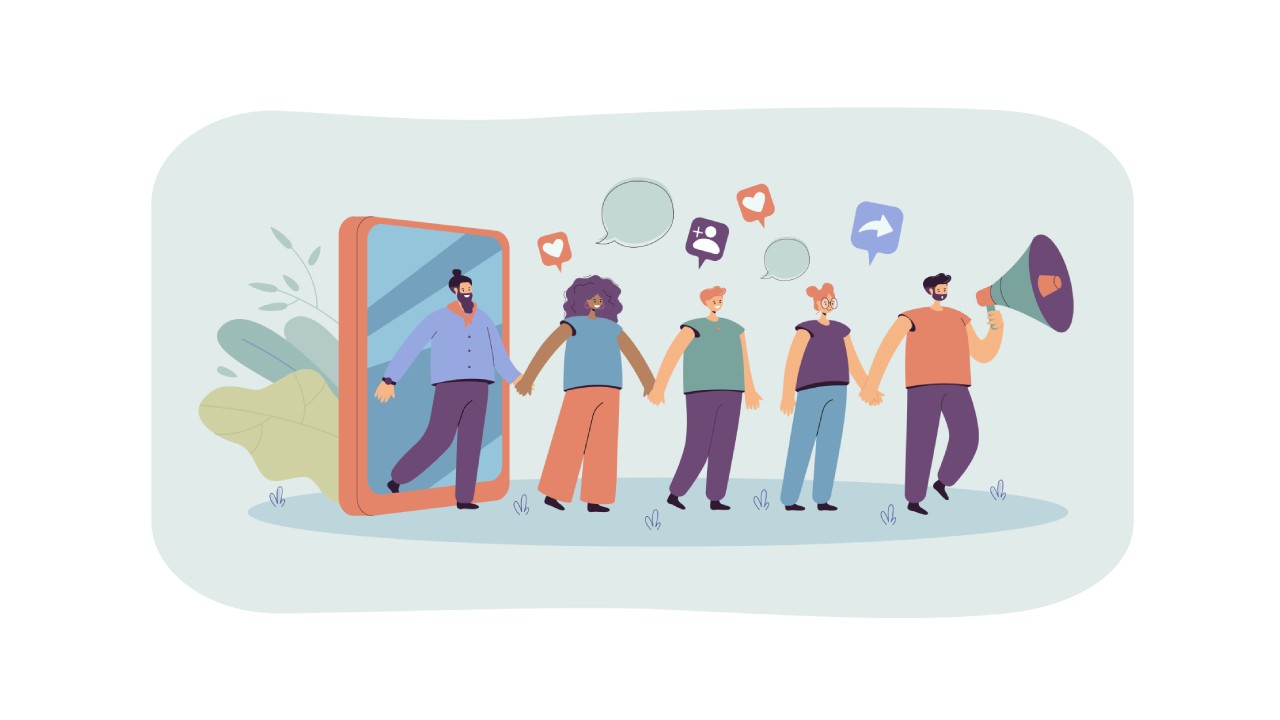
You can’t just wing it and hope people care about your content. You need to understand who you’re actually talking to.
Start by building audience personas. These are basically detailed profiles of your ideal followers. Think of it like creating a character sketch:
The basics: How old are they? Where do they live? What do they do? What are they into?
Their online habits: Which apps do they live on? Are they morning scrollers or late-night lurkers?
What they actually click on: Do they watch videos? Save carousels? Read long captions?
Check out tools like Google Analytics, Meta Insights, Sprout Social, or LinkedIn Analytics to find real data. Don’t just guess based on vibes.
The more you understand these people, the easier it gets to make content they’ll actually stop and look at instead of scrolling past.
3. Make Your Posts Actually Searchable (Social SEO)
People are searching on social platforms now, like they used to search on Google. So your posts need to be optimized, just like blog posts. This isn’t optional anymore if you want people to actually find you.
Use Keywords in Your Captions
Write captions with phrases people are actually typing into the search bar. Think product benefits, how-tos, or solutions to problems. Instead of something vague like morning routine, try my 2026 skincare routine for dry skin. That’s way more searchable than the former.
Be Smart About Hashtags
Use hashtags that help people discover your content. Do some research on what your audience is actually searching for. Mix popular tags with more specific ones. Stick to about 3-5 per post so you don’t look spammy.
Answer Real Questions
Create content that directly answers stuff your audience is wondering about. This makes your posts more relevant and way more likely to pop up in searches.
Add Alt Text to Your Images
Describe what’s in the picture using relevant keywords. It helps with accessibility AND makes your content easier to find.
4. Partner With Influencers and Creators
Forget chasing the accounts with millions of followers. In 2026, those massive numbers don’t mean much if nobody actually trusts what the person is saying. Audiences have a “fake” detector that’s sharper than ever—if a partnership feels forced, they’re going to scroll right past it.
Go small to go big. Micro and mid-tier creators are where the magic happens. They might have a smaller crowd, but that crowd actually listens to them. If you’re selling a productivity app, a creator who lives and breathes organization will outperform a generic “lifestyle” influencer every single time.
Give up a little control. The biggest mistake you can make is bossing a creator around. Don’t hand them a stiff corporate script and expect it to go viral. They know their audience better than you do. Tell them what your goals are, then let them do their thing. Whether it’s a messy behind-the-scenes clip or a day in the life post, if it feels real, it’ll work.
Think long-term. Don’t just pay for one post and vanish. It looks like an ad because, well, it is. The best results come from actual relationships. When a creator mentions your brand over a few months, it stops looking like a paid gig and starts feeling like a genuine recommendation from a friend.
5. Use AI Tools But Don’t Let Them Take Over
AI isn’t some futuristic thing anymore. You’re probably using it right now. It’s just part of the toolkit at this point, but the key is using it to speed things up, not to strip away what makes your content actually sound like you.
Simply use AI for the tedious stuff.
Need 20 different hook ideas for a video? A rough outline for a Reel script? Want to turn one blog post into ten different captions? That’s where AI is actually helpful.
Some AI tools can also spot trends for you. We’re not just looking at last week’s stats anymore. They can analyze your data and basically say when’s the best time to upload your content.
But always remember the golden rule: AI creates, humans edit. Always run your AI-generated content through a “vibe check.” If it sounds like a robot wrote it, your audience will scroll right past. Use it to build the skeleton, then add the heart yourself.
Conclusion
Whether you’re building awareness, driving conversions, or nurturing a loyal audience, this guide gives you the fundamentals and forward-thinking strategies to make an impact in 2026 and beyond. If you're looking for an all-in-one social media management tool, Sparkum is the way to go. Join our waitlist to get notified when we go live!