





If you've ever spent an hour down the hashtag rabbit hole only to watch your post flop anyway, you're not alone. That whole approach just doesn't cut it anymore.
The way AI has changed hashtag research is one of the more genuinely useful shifts in social media lately. Not "useful" in a buzzword way. Useful in a time-efficient way.
The old method? You'd stalk competitor profiles, go with your gut, or throw some terms into a basic tool and cross your fingers. In 2026, that's pretty much dead. AI tools now scan massive amounts of data in real time, give you a sense of which hashtags will actually perform before you hit post, and keep learning from how your specific audience behaves.
For anyone managing multiple brands or content calendars at once, that's a big deal.
In this article, we're breaking down how AI-powered hashtag research actually works, which tools are worth looking at, how to fit it into your existing workflow, and what to watch out for. Whether you're running a small startup account or managing a whole brand portfolio, this will probably change how you think about hashtags going forward.
What Traditional Hashtag Research Looked Like

Not that long ago, hashtag research was basically a manual grind. The goal was always that sweet spot: popular enough to get discovered, niche enough that you wouldn't get buried.
And it kind of worked until it didn't.
The problems were pretty obvious once you lived through them. It was a slow process because a solid hashtag research session could easily eat two or three hours. It was reactive because by the time you spotted a trending tag and built content around it, the moment had usually passed. In addition, what worked for some competitor in a totally different niche wasn't going to magically work for you.
There was also the decay problem. A hashtag that killed it three months ago might now be oversaturated, quietly shadow-banned, or just... culturally over.
It’s also difficult to set up a system for keeping your hashtag lists fresh. Most people just didn't, which meant they were working with stale data and wondering why reach kept dropping.
How AI Flips the Script
AI-powered hashtag research fixes most of those problems.
These tools use machine learning and NLP to dig through engagement data from millions of posts, catch trends before they blow up, and suggest hashtags based on your actual account history and audience.
So instead of spending an hour sorting through 50 hashtags to land on 10 usable ones, you get a ranked shortlist in seconds. Instead of scrambling to hop on a trend that's already fading, you're ahead of it. It's just a less exhausting way to work.
And for social media managers, the time thing really matters. Every hour you're not doing hashtag research is an hour you can put into strategy, content, or actually engaging with your community, or the parts of the job that still need a real human behind them.
How AI Hashtag Research Actually Works
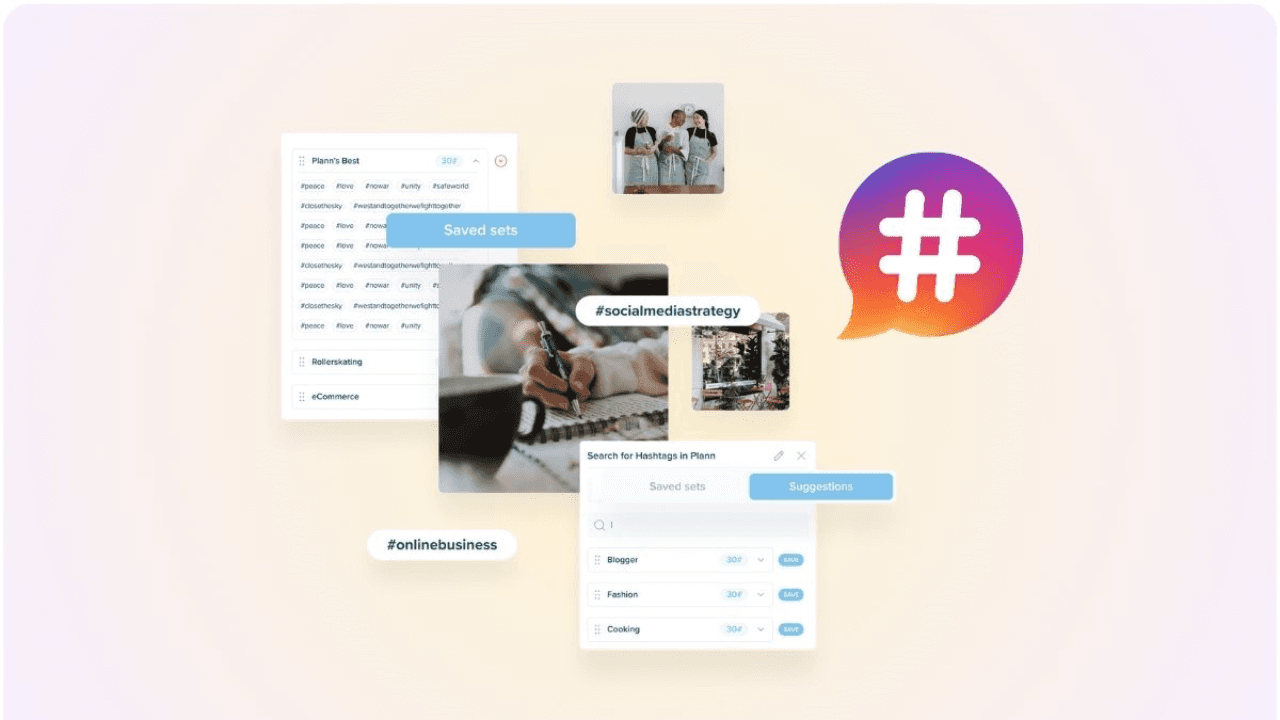
It understands context, not just keywords
Most AI hashtag tools run on natural language processing (NLP) or basically the same "brain" behind things like Alexa or ChatGPT. But for hashtag research, the real magic isn't just reading your words; it’s actually understanding the context.
If you drop in a caption about sustainable packaging, a basic tool might just give you #sustainablepackaging. But a smart one knows what you’re really talking about. It’ll suggest things like #circulareconomy, #zerowaste, or #ecobrand because it gets the bigger picture, not just the literal text.
That's a much smarter starting point than a keyword match.
For anyone who's tried to build out a hashtag strategy using related terms rather than just obvious tags, AI makes that process way less painful. You don't need an SEO background to do it well anymore.
It learns what actually drives results
Machine learning means these tools get better over time by spotting patterns across huge datasets. And not just likes; we're talking saves, shares, comments, and follows. The metrics that actually signal whether content is landing.
Over time, AI tools build up a picture of what works where. Like, #SocialMediaTips might perform great on an educational carousel but fall flat on a B2B Reel. That kind of specificity was basically impossible to get manually.
Some tools even personalize recommendations to your account specifically by learning from your post history to figure out which hashtag types were effective, and which ones just looked good on paper.
It spots trends before they peak
This might be the most practically useful thing AI brings to hashtag research. Instead of telling you what's trending right now, good AI tools track momentum and flag it while it's still on the way up.
For newsjacking, seasonal content, or jumping on a cultural moment, timing matters a lot. Getting a heads-up three days before something peaks gives you actual time to make good content, instead of rushing something out just to catch the wave before it crashes.
How to Integrate AI Hashtag Research Into Your Workflow

1. Build an AI-Assisted Hashtag Research System
You don’t need to overhaul your entire strategy; it’s more about using AI to fill in the gaps.
Sort your hashtags into buckets: You can use AI to help build a "hashtag library," so you aren't scrambling every time you post. Categorize your hashtags into branded, community, niche, and trending.
Once you have that structure down, the whole process feels a lot less like a chore.
Set up trend alerts: Most AI tools let you configure notifications when hashtags in your space start gaining momentum. That way, you're not manually checking; you just get a heads-up when something worth paying attention to is starting to move.
Build hashtag sets by content type: Work with AI to create pre-approved tag groups for the formats you post regularly. Having these ready saves a surprising amount of time at the publishing stage, and keeps your strategy consistent without you having to think about it every time.
Review monthly: Look at what's performing, what's flatlined, and let AI help you swap out the dead weight. A monthly check-in is usually enough to keep things fresh without turning it into another time sink.
2. Avoid the Following Mistakes
AI is great, but it’s definitely not perfect. There are a few easy-to-miss traps that can mess up a solid strategy if you’re not careful. Here’s how to keep it real:
Trust your gut over the data: AI reads numbers, but it doesn't always "get" culture. A hashtag might be trending, but that doesn't mean it actually fits your brand’s vibe. Give every suggestion a quick human reality check before you hit post.
Stop chasing the massive numbers: It’s tempting to go for tags with millions of posts, but your content will probably get buried in seconds. Aim for a mix: some big, some medium, and some super-niche.
Don't set it and forget it. Social media moves fast. What worked three months ago might be totally stale now. You don't need to spend hours on it, but make sure you’re checking in on your tags regularly to keep things fresh.
Bottom Line
AI doesn't just make hashtag research faster. It makes it genuinely better. The ability to process data at a scale no human could match, catch trends early, tailor recommendations to your specific audience, and keep learning from what's working.
You can use AI to surface the options, then use your own judgment to make the final call. Don’t forget to set a regular review cadence so your strategy doesn't quietly go stale.
So, the real question isn't whether AI belongs in your hashtag research. It's just how soon you're going to start.
If you’re looking for an all-around social media management tool, check out Sparkum today!