




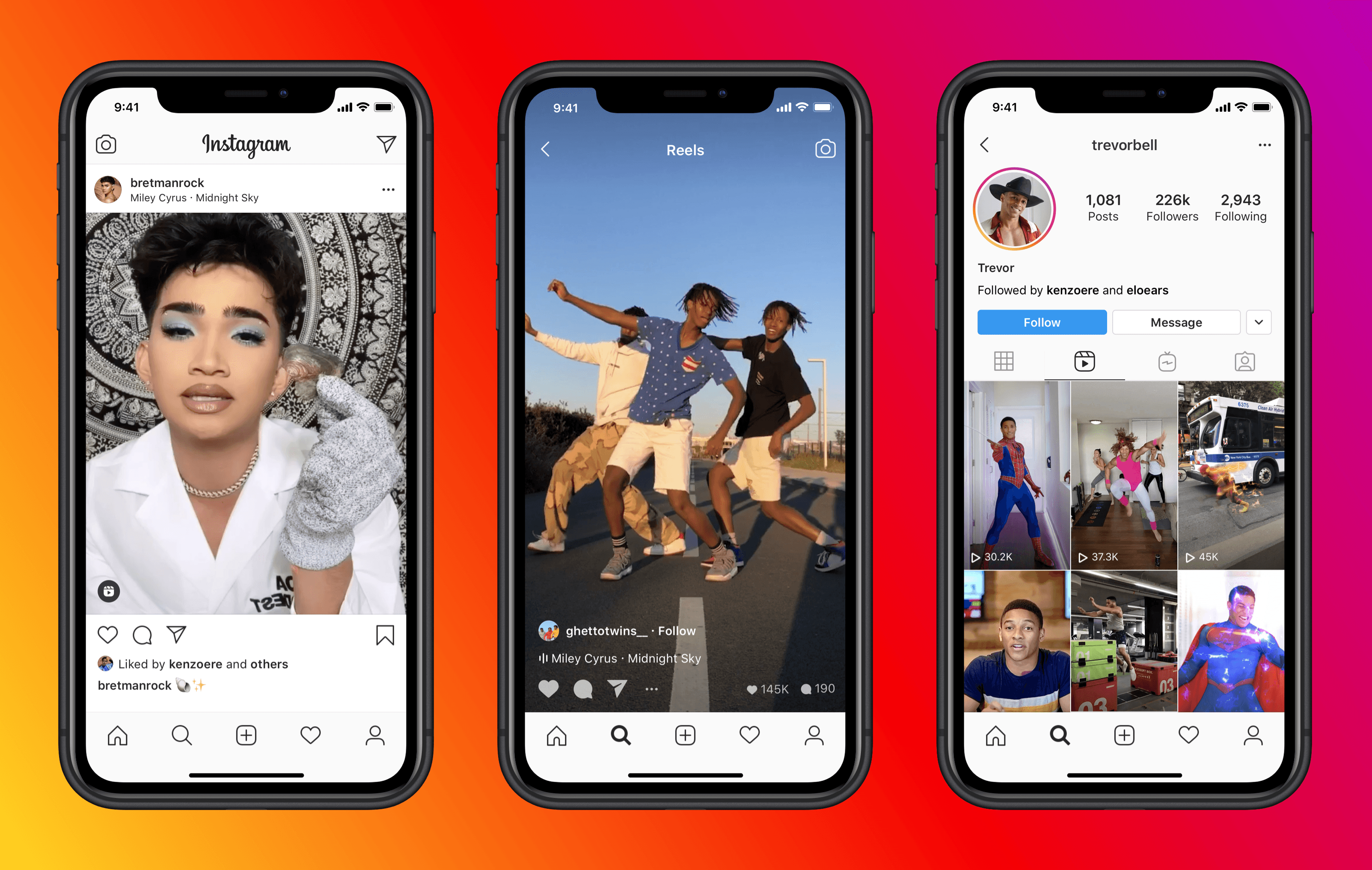
Every minute, people watch nearly 139 million Instagram Reels. Let that sink in for a second. If you’re still treating Reels as a “we’ll get to it eventually” thing, that number is your wake-up call.
Reels aren’t a novelty anymore. They’re genuinely the best organic reach tool Instagram has right now. They make up over 35% of total screen time on the platform, the algorithm pushes them into discovery feeds and the Explore page, and they’re reaching 2 billion monthly users. Brands that have figured out Reels are leaving everyone else behind. It’s that simple.
This guide is for social media managers who want a clear strategy for Instagram Reels—not just random posting and hoping something performs. We’ll break down how the Reels algorithm actually works (without the technical jargon), what signals drive reach and discovery, and how to actually make a reel that works. Let’s dig in!
Why Instagram Reels Matter for Businesses
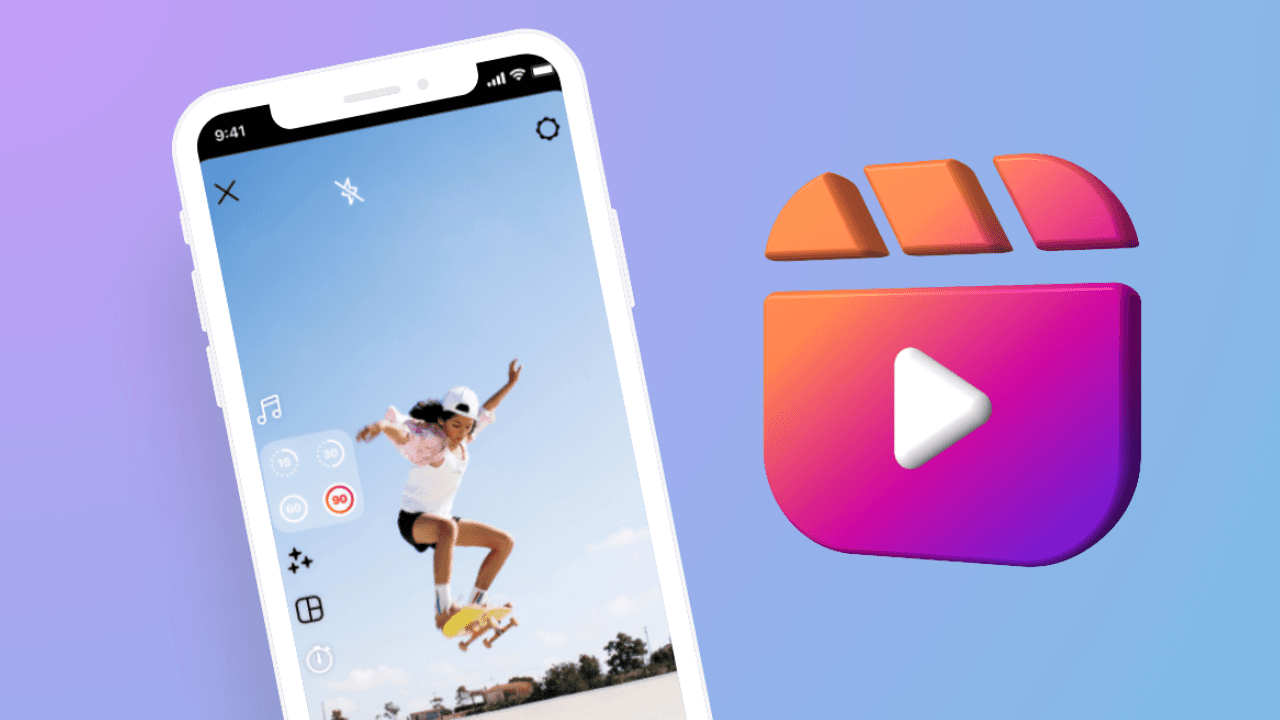
If you feel like Reels are taking over your feed, it’s because they are. In 2026, they account for 50% of the time people spend on Instagram. For businesses, they’re basically a cheat code because they:
Reach audiences beyond followers (55% of Reels views come from people who don’t even follow you yet)
Generate high engagement
Showcase products visually
Build brand personality
Studies show they pull in way higher engagement than your standard static posts, and it’s not uncommon to see them get double the reach. Here’s how brands are actually using them to stay relevant:
Product demonstrations
Tutorials or educational tips
Behind-the-scenes content
Customer testimonials
Trend participation
The Explore Page Advantage
Think of the Explore page as Instagram’s version of the front page of the news. About 500 million people are scrolling through it every single day. Since the app uses this space to show people stuff they don’t already follow, it’s basically a massive discovery engine for your brand.
If you’re sticking strictly to photos or carousels, you’re playing on hard mode. Pumping out Reels is the closest thing you’ll get to free advertising because the algorithm is practically begging to put video content in front of new eyes.
Not Just for Gen Z
There’s this annoying myth that Reels are only for teenagers doing dance trends. That’s just not true. Data from the last couple of years shows that Millennials and Gen X (the 25–54 crowd) are all over this format.
Whether you’re selling to a college student or a homeowner, your audience is already watching. If you aren’t making Reels, you aren’t “missing a niche.” You’re missing your actual customers.
Unique Insight for Social Media Managers
Are you not yet posting Reels? That means you’re already falling behind.
The algorithm’s expectations are getting higher. In competitive industries, Instagram is starting to deprioritize accounts that only post “old school” static content.
It’s like trying to run a business in 2026 without a website. You don’t want to wait until your competitors have already locked down the “Reels territory” before you decide to start.
The best time to start practicing was yesterday; the second-best time is right now.
How Instagram Decides What Gets Seen
The Reels algorithm isn’t some big, mysterious black box. It’s really just a few layers of logic trying to figure out if your video is worth showing to people.
Even Instagram’s head, Adam Mosseri, came out and said there are three main things that actually move the needle.
1. Watch Time (Most Important)
If people aren’t watching, the algorithm isn’t pushing. Here’s the reality: you have about 1.7 seconds to stop someone from scrolling. That’s it.
If you don’t hook them in that tiny window, you’ve already lost. The goal isn’t just to get them to click; it’s to keep them there past the 3-second mark.
2. Likes Per Reach
The percentage of viewers who like your post. This matters more for reaching your existing followers than for discovery.
3. Sends Per Reach
How often do people share your content via DM? According to Metricool data, 694,000 Instagram Reels are sent via DM every minute, making shareability the single most powerful signal for viral, discovery-driven growth.
A Reel that someone sends to a friend tells the algorithm something important. Shares are a strong signal that the content is worth showing to more people.
Follower Reach vs. Non-Follower Reach
The algorithm distinguishes between two types of reach, and understanding this distinction is critical for strategy:
Follower reach: Content shown to people who already follow you. Likes and comments drive this.
Non-follower reach (discovery): Content shown to people who don’t follow you, via Explore, Reels tab, and recommendations. DM shares and watch time drive this.
For most business accounts trying to grow, non-follower reach is the prize — and it’s earned through shareability and strong retention, not just high like counts.
The “Your Algorithm” Feature
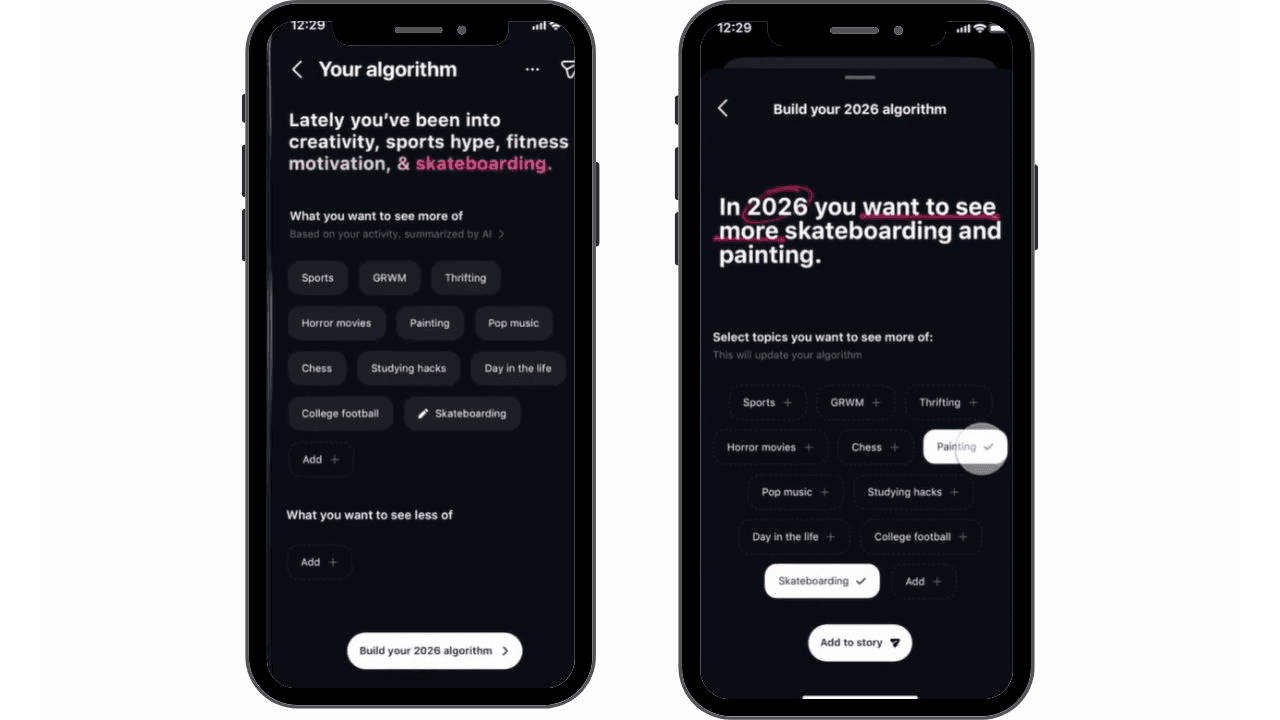
In late 2025, Instagram dropped a massive update called “Your Algorithm.” It basically gave users a dashboard where they can tell the app exactly what they want to see more (or less) of.
For brands, this was a game-changer. Early data shows that when a Reel is clearly focused on a specific niche, its reach can jump by 40–50% because it’s being matched directly with people who raised their hand and asked for that topic.
The takeaway? Vague content is expensive. A Reel that feels like it’s about fashion, then suddenly turns into a vlog or a travel tip, can confuse the system.
You need to be unmistakably clear about your topic from the very first frame to catch that interest-matching wave.
What the Algorithm Penalizes
Reused content with watermarks from other platforms (TikTok watermarks are actively demoted)
Videos without audio
Content exceeding 3 minutes
Low-resolution visuals (Instagram applies compression penalties)
Early drop-off rates below 40%
How to Actually Make a Reel That Works
You don’t need a Hollywood budget or a fancy studio to do this. What you do need is a workflow that’s fast enough to keep you consistent but good enough not to look like a total amateur. Here’s the step-by-step most brands are using:
Step 1: The Idea and Script
Keep it simple. One Reel = One Idea.
Trying to jam five different tips into one Reel is a recipe for disaster. Once it starts feeling crowded, people just tune out. Honestly, it’s better to keep a few quick bullet points handy while you’re filming—it keeps you from rambling and ensures the video actually stays on track.
A solid trick? Write out your script, then cut it in half. What looks “short” on paper usually ends up being the perfect length once you’re actually talking on camera.
Step 2: The Shoot
Vertical Reels are the trend right now. Film in portrait mode and make sure the lighting’s decent so everything looks clear. Try to keep your phone steady, too. Shaky clips tend to feel a bit rough, so it helps to prop your phone up or use a tripod if you have one.
Step 3: The Edit
Instagram’s built-in editor works fine for simple Reels. But if you want a little more control, apps like CapCut, Adobe Premiere Rush, or InShot can make editing easier.
Here’s something interesting. Around 69% of people watch Reels with the sound off. That’s why captions really matter. They help people follow along even without audio.
And keep the video moving. Quick cuts, small zooms, and text on screen help hold attention so the video doesn’t start to feel slow.
Step 4: The Post
Select a compelling cover image that clearly signals the video’s content. This is what people see when browsing your profile grid. When it comes to captions, write something that adds value beyond the video rather than restating it. Include a clear call-to-action, and add 3-5 relevant, specific hashtags for categorization.
Step 5: Early Engagement
The first 60 minutes after you hit “Share” are huge. Don’t just post and ghost.
Hang around to reply to comments and get the conversation moving. This tells the algorithm your post is “hot,” which helps it get pushed out to more people.
Final Thoughts
Ready to elevate your Reels strategy? Start by auditing your last 10 Reels for a 3-second hold rate and sends per reach. Those two numbers will tell you exactly where to focus first.
If this guide gives you at least one new insight to test this week, share it with another social media manager who’s wrestling with their Reels strategy. You could change their entire approach!
Want to simplify your workflow and get more results from the content you’re already creating? Keep an eye out for Sparkum’s launch! It’s built for teams that want to move faster, stay organized, and turn content insights into real growth. Join our watchlist to get notified!